
Second, we are backing deep space Mining.
The Moon is not a scientific monument. It is the nearest and largest deposit of resources the solar system has placed within reach of Earth, and the foundation for everything that comes after it. The Extraterrestrial Company is backing a development company deploying the first commercially structured lunar mines, beginning with helium-3 at three prime mare sites and extending across the full spectrum of space resources as the infrastructure layer matures.
Each MineCo is structured as a dedicated special purpose vehicle, deploying approximately USD 10 billion in capital across a ten-year operational timeline. The model draws directly from terrestrial project development and infrastructure finance: Design-Build-Finance-Own-Operate-Maintain (DBFOOM), anchored by offtake contracts, de-risked by export credit agency structures, and financed through senior and subordinated equity tranches. The project finance community knows this model well for terrestrial mining. We are applying it to a new operating environment.
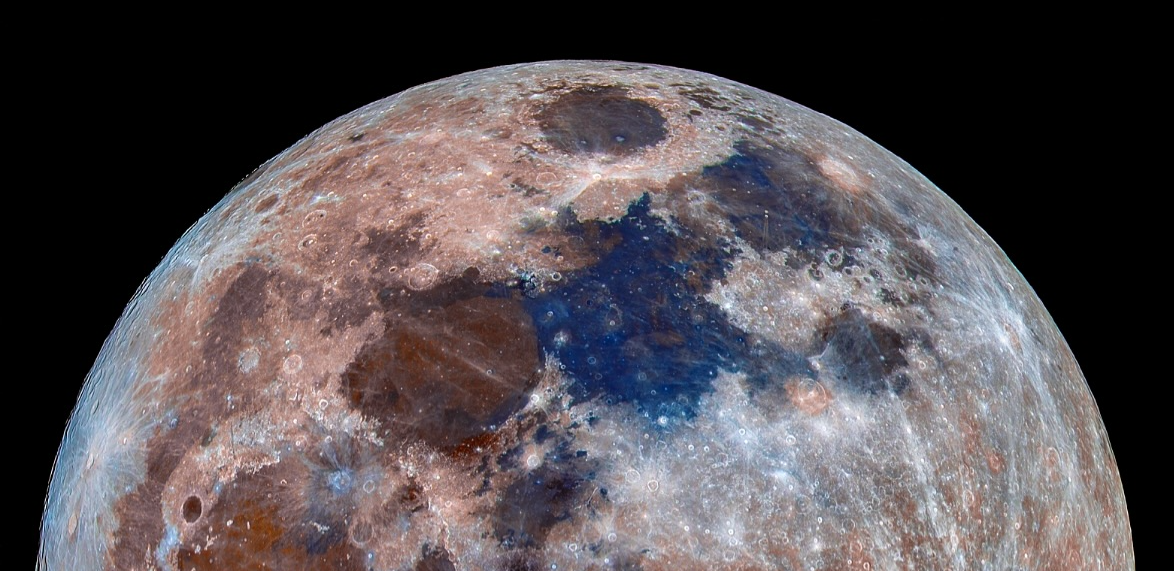
Real colour photograph of the Moon by Andrew McCarthy, the best astrophotographer on Earth
The abundant resources available in deep space.
The Moon, Mars, and the Asteroid Belt represent the most significant resource frontier available to human civilisation. The following are the primary extraction targets:
Helium-3
Embedded in lunar regolith by four billion years of solar wind exposure, helium-3 is a rare isotope on Earth and abundant in the top few metres of lunar soil. It is the primary fuel for deuterium-helium fusion reactors and a critical refrigerant for quantum AI data centres. Each MineCo targets 1,064 kilograms of helium-3 per year per site, returned to Earth on a quarterly schedule. At current and projected fusion and quantum demand trajectories, this is one of the most valuable commodity streams available to institutional investors.
Water Ice and Volatiles
Confirmed in permanently shadowed regions at the lunar poles, water ice is the foundational resource for permanent human presence: it provides life support, radiation shielding, and when split into cryogenic hydrogen and oxygen, the propellant for the entire cislunar logistics chain. Hydrogen, oxygen, xenon, krypton, argon, and neon are present across multiple mare sites. Mars and volatile-rich asteroids extend this supply chain across the solar system.
Structural Metals and Rare Earths
Lunar regolith is rich in titanium (from ilmenite), aluminum, silicon, iron, and magnesium — the materials for locally sourced construction, 3D-printed surface infrastructure, and radiation shielding. Martian basaltic deposits provide iron oxides and comparable structural feedstocks. Class-M asteroids carry some of the highest concentrations of platinum group metals (platinum, palladium, iridium) and rare earth elements available anywhere in the solar system, critical for electronics, catalysis, and advanced manufacturing.
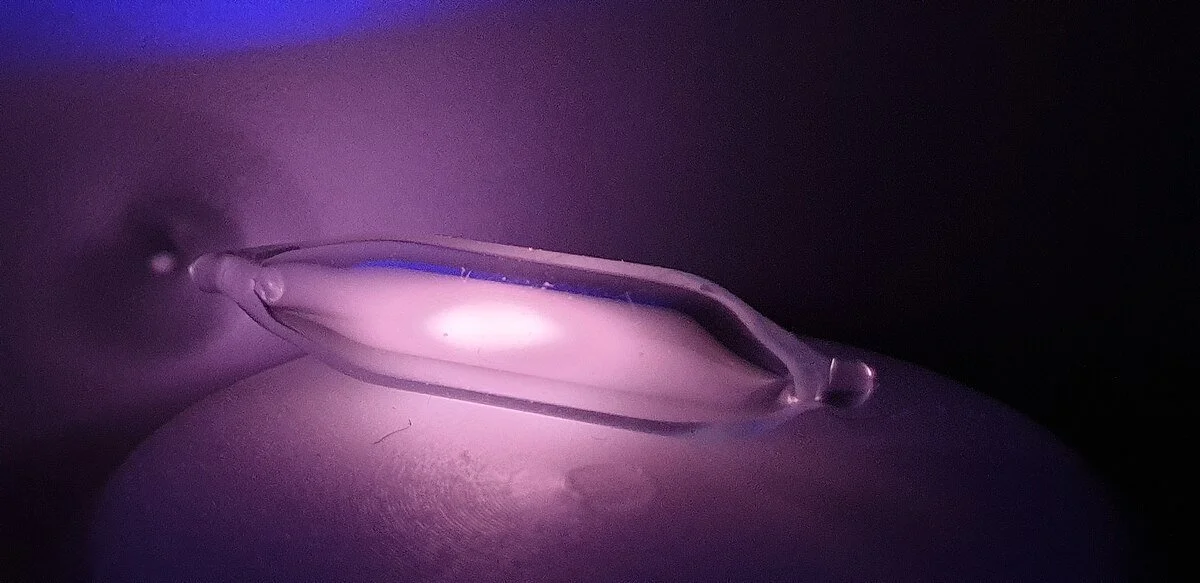
An ampoule of helium-3, a light, stable isotope of helium with two protons and one neutron
Our first three mines on the Moon
Sea of Tranquility
The smooth basaltic plains of Mare Tranquillitatis provide an operationally favourable environment for large-scale autonomous mining. Regolith several metres deep, moderate compaction, mature solar wind exposure, and significant ilmenite concentrations make this a technically accessible first site. Helium-3 concentrations are consistent with modelling based on Fegley and Swindle analyses. Mild slopes support high-throughput robotics deployment, though boulder fields and crater rims require precision navigation.
Sea of Serenity
The highest titanium concentrations of our three initial sites, combined with measurable helium-3, water hydroxyls, and a diverse volatile inventory. The geological complexity here — highland breccias, basaltic valley floor, deep regolith pockets — demands more capable mining robotics and more precise navigation. The returns justify the engineering investment. The proximity to the Taurus-Littrow highlands provides access to a wider range of mineralogical targets than the mare sites alone.
Ocean of Storms
High optical maturity of the regolith indicates substantial and sustained solar wind exposure — translating to efficient helium-3 embedding. Abundant ilmenite makes this a strong titanium extraction site alongside the primary helium-3 mission. Regolith depth and compaction vary across the site; thick dense layers overlying looser substrata require adaptive extraction equipment. The mild overall slopes of Oceanus Procellarum are the most favourable of our three initial sites for high-throughput autonomous operations.
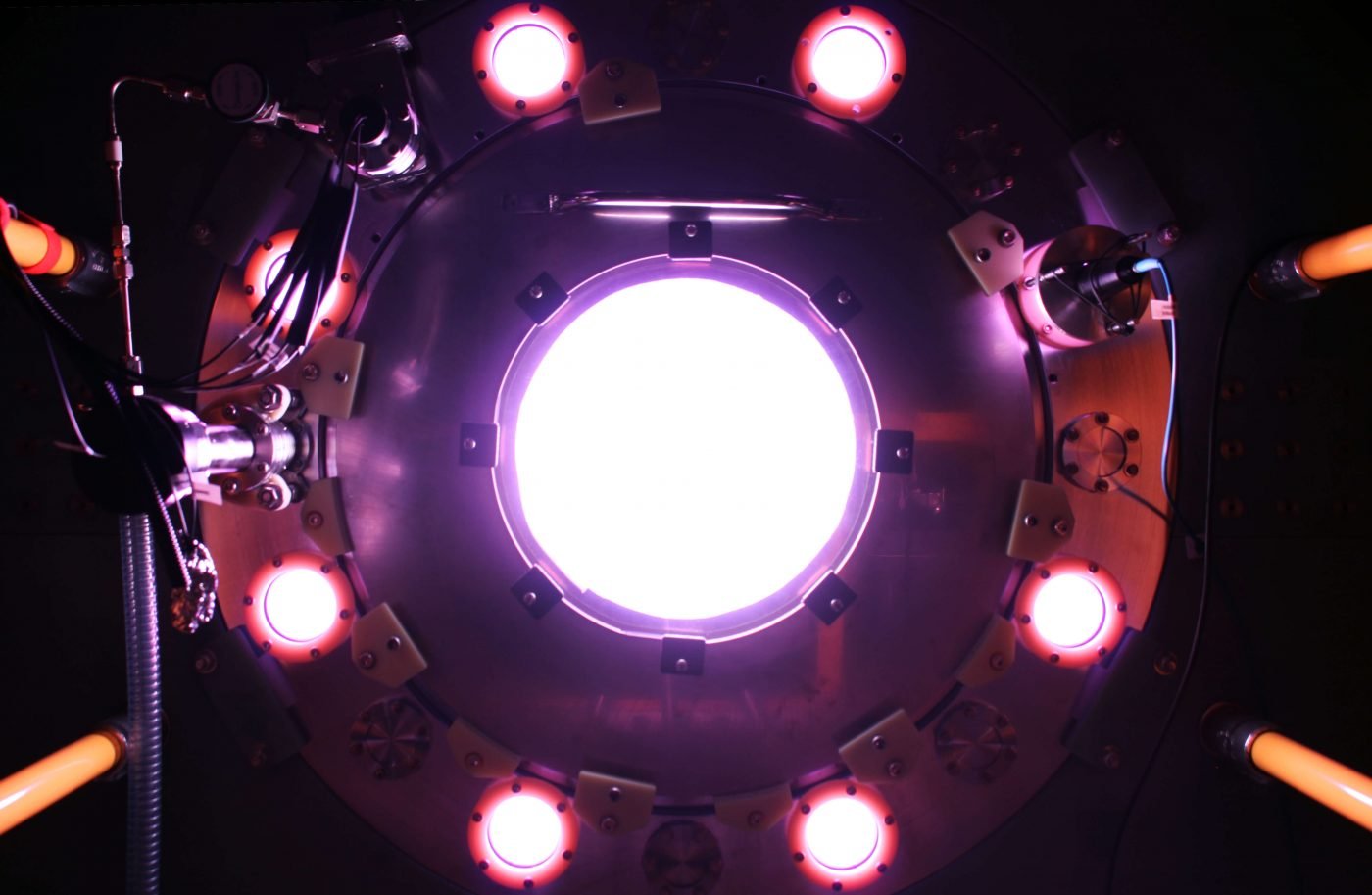
Groundbreaking Helion Polaris fusion reactor using deuterium + helium 3 as fuel